
In my four decades of experience, from the bustling textile markets of 1990s Hong Kong to running a sizable global linen business, I’ve learned one hard truth: You haven’t made a sale until the buyer actually sees the value.
Today, that value is usually trapped inside a file. A 100MB PowerPoint, a 1GB technical specification, or a 10GB 4K promotional video.
We’ve all been there. You spend forty hours crafting a pitch. You hit "Send" in Outlook. And then... silence. You wait three days, send a polite "just checking in" email, and hear the words that every salesperson dreads: "I don't think I ever got that, can you re-send it?"
Your email didn't "get lost." It was assassinated by a corporate firewall. It was too big, too "suspicious," or simply buried in a cluttered inbox. In our experience building SinoSend, we realized that the best way to share large files isn't through an attachment—it’s through a delivery system.
The "Free" Trap: Why "Large File Transfer Free" is Costing You Thousands
When sales are slow, it’s tempting to look for a large file transfer free solution. You just want the file to get from Point A to Point B. But if you are selling a high-ticket service or a global export contract, "free" is the most expensive mistake you can make.
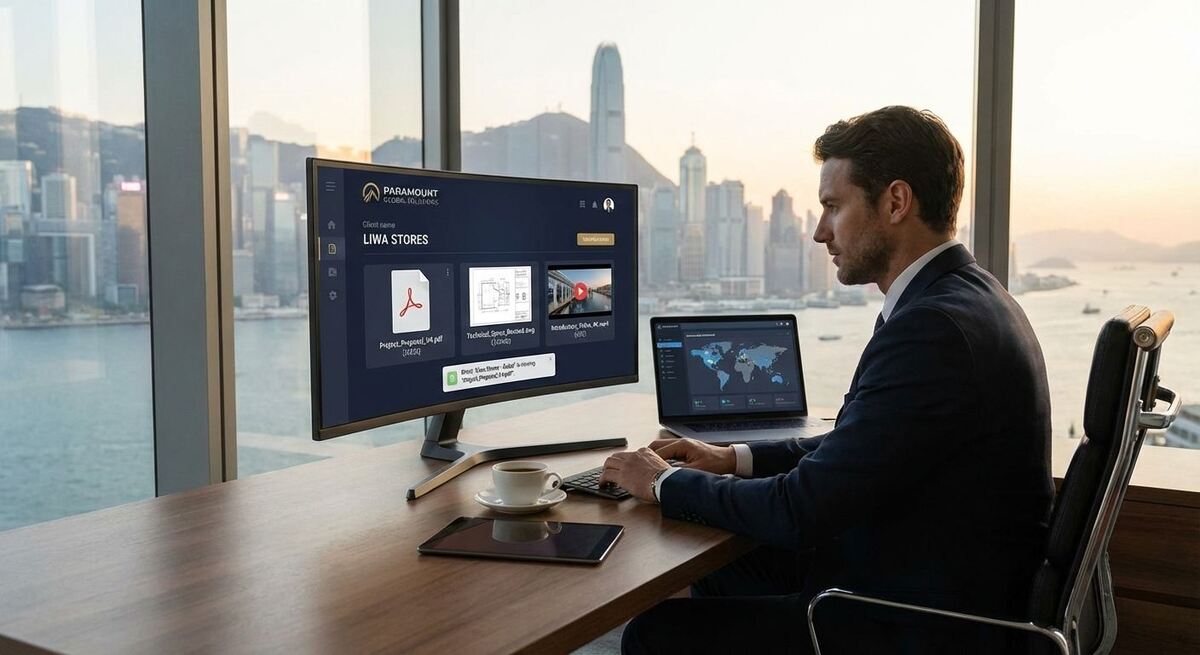
I often tell my team: “Your delivery page is your second office.” If you invite a billionaire investor to a meeting, you don’t host them in a dark, messy basement. You take them to a boardroom that reflects your brand. Yet, many salespeople send multi-million dollar proposals via a generic w transfer link. When the client clicks that link, they see third-party ads, "Sign Up Now" pop-ups, and a generic interface that screams "temporary."
If you send file via wetransfer, you are essentially handing your client a brown paper bag. It gets the job done, but it doesn't build trust. In the world of high-stakes sales, trust is the only currency that matters. To increase your bottom line, you need to transition from "sharing" to "presenting."
The Creative Edge: Elevating Your Work with a Digital Sales Room
Let’s look at the photography and media industry. I’ve spoken to dozens of creatives who struggled with client ghosting. They would finish a beautiful shoot, send the proofs, and then wait weeks for approval.
The problem? The client was overwhelmed. They received a zip file of 500 images and didn't know where to start.
By using a digital sales room, these photographers transformed their workflow. Instead of a expiring link, they provided a branded, permanent "Studio" where the client could view, comment, and approve files in real-time.
"When I stopped sending links and started sending 'Experiences,' my referral rate doubled. Clients felt like they were part of a premium process, not just a transaction." — SinoSend Creative Partner
In our experience, when you wrap your files in a digital sales room, you aren't just a vendor anymore. You are a consultant. This shift in perception allows you to maintain higher margins because you are no longer competing on price—you are competing on the quality of your delivery.
Global Trade: Why "Managed File Transfer" is a Closing Tool
For those of us in the trenches of international export, the stakes are even higher. I’ve spent years moving linens from Paramount Linens to buyers across the globe. In this world, a "spec error" can cost $50,000 in shipping and weeks of delays.
This is where managed file transfer becomes a competitive advantage.
Traditional email is a "send and pray" method. You have no idea if the factory in Shanghai opened the updated CAD file. Managed file transfer software changes the game by giving you an audit trail.
I remember a specific deal last year where a buyer claimed they never received our updated terms. Because I was using a managed file transfer system, I could see that someone at their IP address in Helsinki had downloaded the file three times.
Instead of arguing, I simply said: "I see the team in Helsinki has been reviewing the draft; would it be helpful if I hopped on a call to clarify the technical specs on page 4?"
I didn't call them out for lying; I used the data to be one step ahead. That is how you use send files online tools to actually close deals. It turns "tracking" into "intelligence."
The Evolution: Beyond "Hightail & You Send It"
Many of my peers who have been in the game for twenty years still think of file sharing as a utility—something like hightail you send it. In its day, that was revolutionary. But the world has moved on.
In 2026, your customers care about Data Residency. If you are sending files to a client in Europe or a government contractor in the US, they need to know where that data is sitting.
When you use modern managed file transfer software, you can choose your region. You can tell your client: "Your data never leaves the EU," or "This transfer is hosted on a secure HK-based server for local speed." This level of control is what separates a "salesperson" from a "Global Trade Professional." It removes the friction that legal and compliance departments usually create, allowing your contract to move through the pipeline 30% faster.
How to Send Files Online Without Killing the Conversation
So, how do you integrate this into your sales flow without sounding like a tech manual? It’s about the "Hand-off."
- Stop the Attachment Habit: Never attach anything over 5MB. It’s the fastest way to hit the "Junk" folder.
- The Branded Tease: Instead of saying "Here are the files," say: "I’ve prepared a secure digital room for your team. You’ll find the high-res renders and the contract there. I’ve also enabled alerts so I can jump on a call the moment you have questions."
- Use the "Open" as a Trigger: The second you get a notification that the client is viewing the files, that is your window. Don't call them immediately (that’s a bit creepy), but send a follow-up email 15 minutes later. Your timing will feel like "perfect intuition" to the client.
Final Thoughts
When I founded Sinosend, I didn't want to build just another "cloud drive." I wanted to build a bridge for people like me—people who move real goods, manage real teams, and face real competition every day.
Our experience has shown that the salespeople who win in 2026 are the ones who respect their client's time. They don't send messy links. They don't send "expired" files. They deliver certainty.
If you are still searching for the best way to share large files, stop looking at the "bytes" and start looking at the "bonds." Every file you send is a chance to prove you are the most professional option on the market.
The Sinosend Edge: Why Branded Delivery Wins Deals
1. Professionalism & Branding
In global trade, perception is reality. When you send a link via a generic third-party service, you are essentially hosting a high-stakes meeting in a public park. By using your own domain and logo, you move the conversation into your private boardroom.
- The Why: It eliminates the "freelancer vibe" and reinforces your authority. A client seeing your brand on the URL ($files.yourcompany.com$) trusts the content before they even click "Download."
2. Actionable Intelligence
Most salespeople are "flying blind," sending follow-up emails based on a calendar rather than client interest. With managed file transfer tracking, you see the exact moment a prospect engages with your proposal.
- The Why: Timing is the difference between a "warm consult" and a "cold nudge." When you get a real-time alert that a buyer in Dubai is viewing your specs, you can reach out while your value is top-of-mind, shortening your sales cycle by days or even weeks.
3. Capacity & Reliability
Nothing kills a deal’s momentum faster than an "Attachment Too Large" bounce-back or a broken zip file. By supporting 100GB transfers, you position your company as a modern powerhouse capable of handling massive infrastructure.
- The Why: It removes the technical "no" from the conversation. Whether it's 4K site footage or a massive technical audit, your ability to deliver it seamlessly tells the client that your operations are just as robust as your product.
4. Data Residency & Trust
In the 2026 regulatory landscape, "where" the data sits is often more important than "what" is in it. If a legal team flags a file-sharing tool as a security risk, your deal stays stuck in purgatory.
- The Why: By choosing your data residency (HK, EU, US), you proactively solve the legal department's biggest headache. You aren't just a vendor; you are a compliant partner who understands global trade risks, making it "safe" for the buyer to say yes.
The Bottom Line
"Branded document delivery isn't about sending a file; it's about owning the final yard of the sale. If you don't control the environment where your client reviews your proposal, you don't control the deal." — Rishi Uttam, Founder of Sinosend