
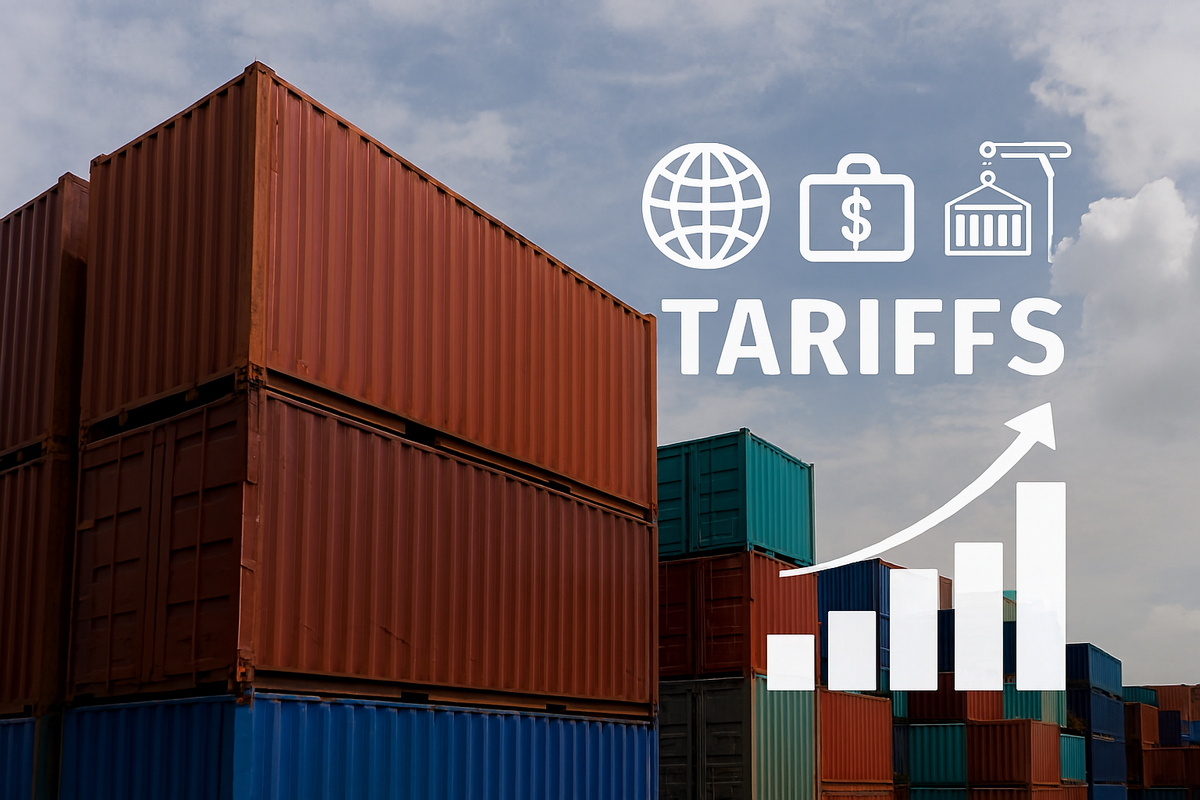
Summary:
US importers often rely on FOB (Free on Board) terms, which can expose them to unpredictable costs due to tariffs and other fees. Switching to DDP (Delivered Duty Paid) can offer price certainty by having exporters cover import duties, thus insulating importers from sudden tariff changes. With recent tariff hikes, especially on Chinese goods, importers need to adapt by rethinking their strategies, including exploring alternative sourcing and leveraging DDP for stability.
Table of Contents
US Importers: You’re Importing Wrong
If you’re a US importer, chances are you’re buying FOB (Free on Board). It’s the most common Incoterm, but it may be quietly costing you more than you realize.
Here’s why: under FOB, you’re responsible for all costs once the goods leave the port of origin. That means freight, insurance, duties, and tariffs all land squarely on your shoulders. In today’s volatile trade environment, that’s a dangerous gamble.
Why DDP Could Be Your Lifeline
Consider shifting your Incoterms to DDP (Delivered Duty Paid). With DDP, the exporter pays upfront for import duties and delivers the goods to your door at an agreed price.
Yes, the unit cost may look slightly higher. But what you gain is price certainty. You know your landed cost before the shipment even leaves the factory. No surprises at customs, no scrambling to cover unexpected duty hikes. In fact, this is arguably what the US government intended: shifting the burden of tariffs to the seller, not the buyer.
In a world where tariffs can swing overnight, predictability is worth paying for.
Quick Trade Terminology Refresher
• Tariff: A tax imposed by a government on imported goods.
• Duty: Often used interchangeably with tariff, it’s a levy on imports (and sometimes exports).
• Quota System: Once common in the 1990s, quotas capped how much of a product could be imported. Suppliers often had to purchase quota licenses for commodities like textiles, toys, and clothing.
Winners and Losers of Tariffs
• Winners: Domestic industries competing with imports, since tariffs raise the price of foreign goods.
• Losers: Consumers, who face higher prices, and businesses that rely on imported inputs. In reality, much of the world loses when tariffs escalate.
The October Shock: 100% Tariffs on Chinese Goods
On October 13, 2025, President Trump announced an additional 100% tariff on Chinese imports starting November 1. This move doubles down on existing tariffs and throws US importers into even deeper uncertainty. Retailers and importers already struggling with 30% tariffs now face the prospect of doubled landed costs, squeezed margins, and disrupted supply chains.
For importers, this isn’t just a policy headline — it’s a direct hit to your bottom line.
How Importers Can Work Around Tariff Swings
So what can you do? Here are some tactical approaches importers are already using:
• Shift to DDP: Push the tariff burden onto your exporter. Even if the upfront price is higher, you gain stability and avoid surprise costs at customs.
• Buy Stock Lots: Many vendors in China sit on unsold or overproduced stock. Buying these lots can mean lower prices, faster delivery, and sometimes reduced declared values.
• Mark as Defective or Secondary Quality: In some cases, goods categorized as “defective” or “seconds” can be imported at a lower declared value, reducing duties. This requires careful compliance, but it’s a lever some importers pull.
• Diversify Supply Chains: Explore sourcing from countries not subject to the same tariff regime. Vietnam, Mexico, and India have become popular alternatives.
• Front‑Load Orders: If tariffs are scheduled to increase, import early to lock in lower rates.
Why This Matters Now
Tariffs are not going away. They are a strategic tool in global trade, and importers are caught in the crossfire. The difference between surviving and thriving is how you adapt.
• Stick with FOB, and you’re exposed to every policy swing.
• Shift to DDP, and you insulate yourself with predictable costs.
• Layer in tactical buying strategies, and you can even turn volatility into opportunity.
Final Take
US importers can no longer afford to treat tariffs as background noise. With 100% tariffs looming on Chinese goods, the old ways of importing are broken. The winners will be those who rethink their Incoterms, leverage DDP for stability, and get creative with sourcing strategies.
In short: stop importing wrong. Start importing smart.